In a business model, we can return the bad ingredients. We get a rotten batch of blueberries, we can return them and get new ones. Education can not work in this model because we can’t simply return the out moldy ingredients. We have to work with what we are given and make it into the best product. Education should not be run like a business, but we can take a look at successful business models and implement some strategies to help support staff and students to create a good product.
What does Google do to be successful? They have a model called the 80/20- The Genius Hour. Google allows their engineers to spend 20% of their week to work on something they are interested in or passionate about whether that be skills to master or projects they want to work on. This Hour has resulted in 50% of Googles products such as News, Gmail, and Google Glasses. With this model, Google has empowered employees simply by telling them to work on something they are curious about.
Genius Hour in the Classroom.
We can bring this 80/20 model into the classroom to draw on students natural curiosity of the world and help students build 21st-century skills. Students are challenged to work on a project for an extended amount of time that they are interested and passionate about. When starting a genius hour here are a few goals and tips to keep in mind.

1. Foster Curiosity.
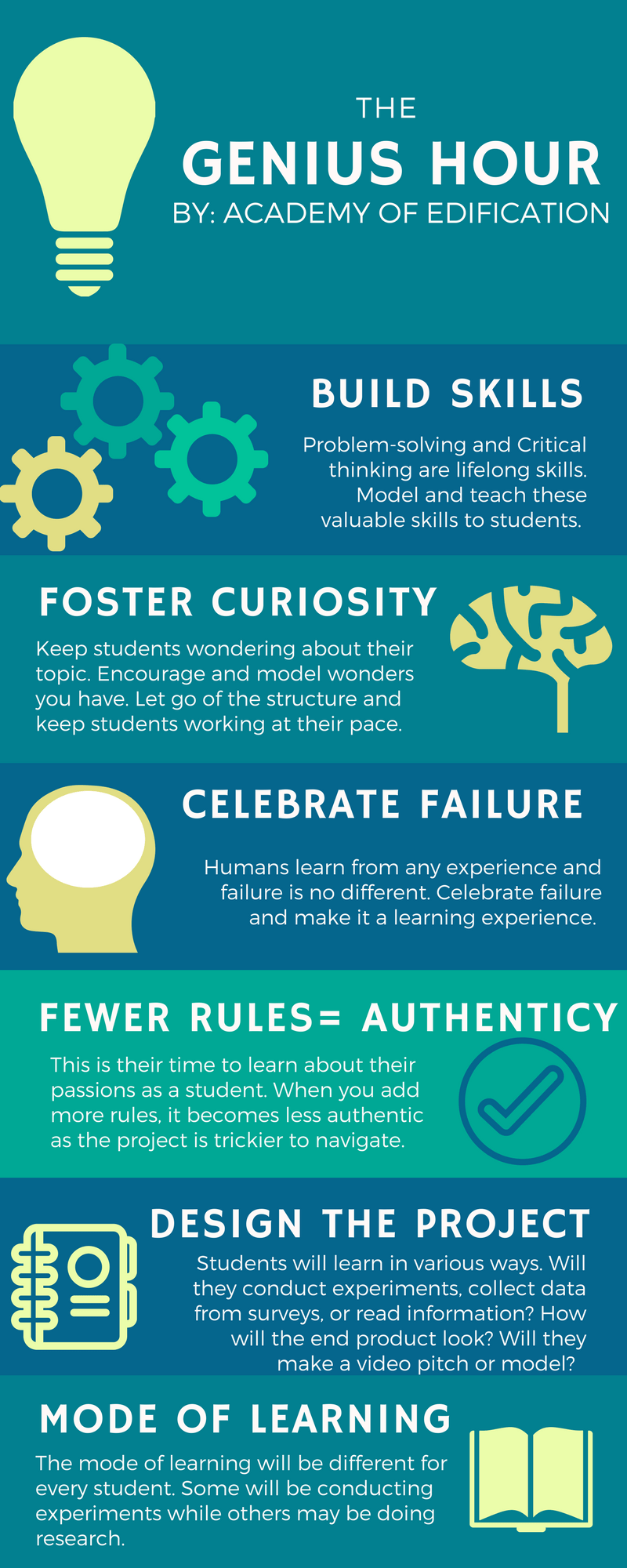
Let students get involved while continuously asking questions about their topic. The teacher serves as a good model to share wonders about the world. Let go of that structure and let students work at their pace. Don’t always set a deadline.
2. Build skills.
Through inquiry-type learning, students are building versatile skills that can be applied in many situations. Problem-solving and critical thinking are lifelong skills. Students also learn about the design process of testing and retesting. They develop reflective habits to improve their learning in other subjects.
3. The Mode of Learning
Students are naturally curious about the world around them. They actively seek answers to their questions. Their time should be spent learning about their topic. Research is different than learning. Are students conducting experiments, collecting data from surveys? The mode of learning will be different for all students.
4. Failure is a learning experience.
Humans learn from any experience and failure is no different. Google glasses died off and no one heard about them anymore, but the engineers gained valuable information about their design. Take the time to celebrate failure and make it a learning experience in your classroom.
5. Fewer rules mean more authentic learning.
When you get tied down to rules, it becomes less authentic and loses meaning to students. This is their time to learn about what they are interested in and rules set the students up for failure. Step away from the structure and let students explore their passions.
6. Face to face time is critical.
Students still need feedback and guidance on their projects. If you abandon them, they will give up on their learning. Encourage them by being involved and asking questions. Be a mentor and guide them along when they get stuck.
7. It’s a project.
Google doesn’t just have that time to learn, they create. Students should come up with a project. Do they create a model, a coding program, or a book? The project list is endless from video pitches to plays. There is power their choice.
8. Reflect
Continuous reflection on the process will ensure success. What is going well and what’s not? It’s okay if you fail too! Encourage the student to do the same. They can reflect on their learning weekly. They can blog about their project to help them problem solve and solidify knowledge they have gained.
Genius Hour in Buildings
Genius Hour does not have to be just for students. Think of the power and authentic learning that could result from having teachers spend an hour a week working on projects they are passionate about. I have seen teachers develop new ways of teaching, ways to support new teachers and perfecting their practice if given the time.
Additional Resources


The Genius Hour Guidebook On Amazon Pure Genius: Building a Culture of Innovation

Live Binder By Joy Kirr (@JoyKirr)

 Academy of Edification